
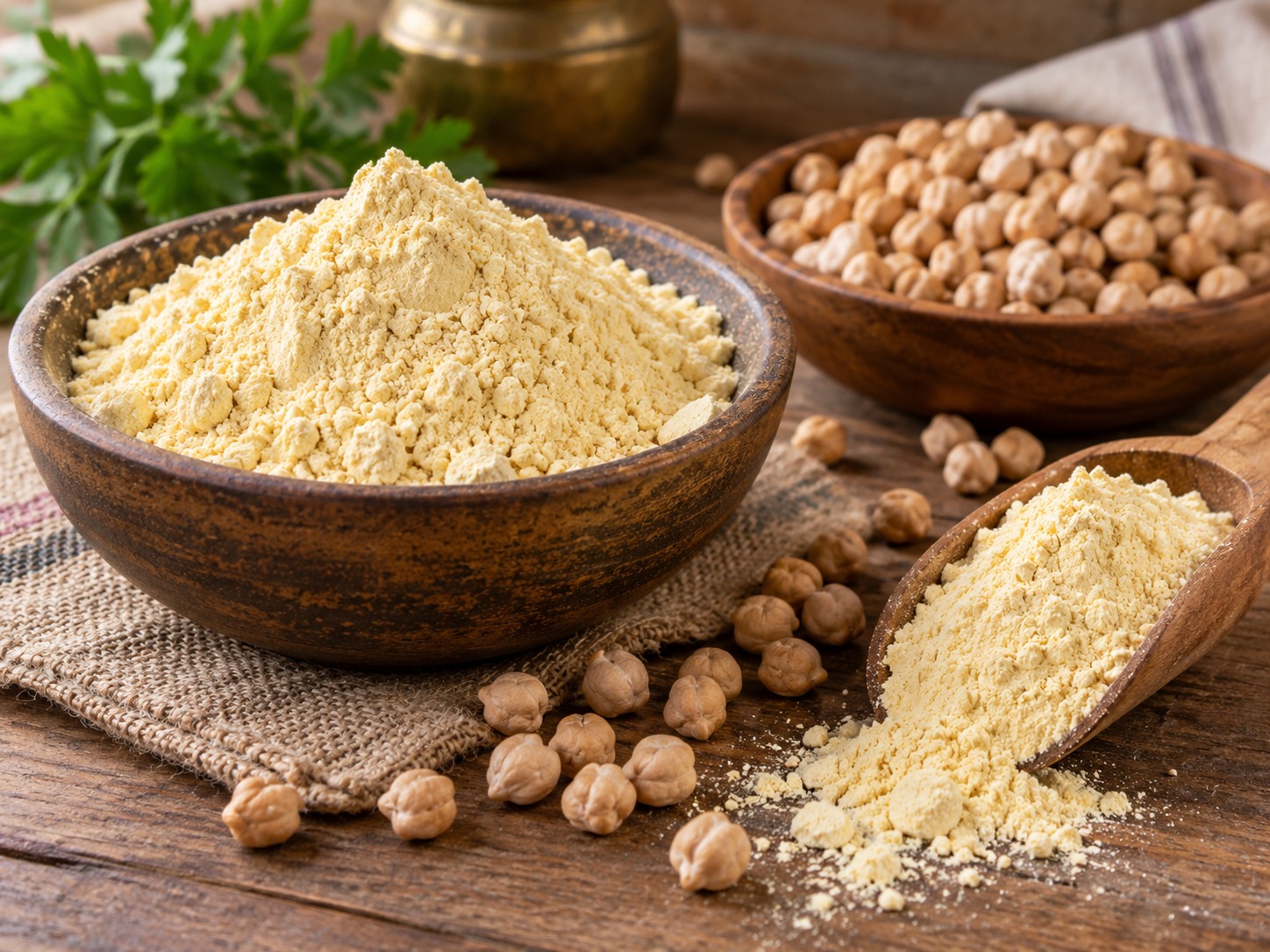
Gram flour and chickpea flour are two ingredients which are essential to certain Indian dishes.
The terms are used interchangeably in recipes, ingredient instructions and descriptions on food packaging.
This can be confusing!
If you are seeking to use either gram flour or chickpea flour in your dish, then always check the description as your recipe may instruct you to use one particular type.
What is gram flour?
Here in the UK, the term ‘gram flour’ also referred to as besan flour, is derived from hulled and split desi chickpeas.
Chickpeas are a pulse in terms of its food group.
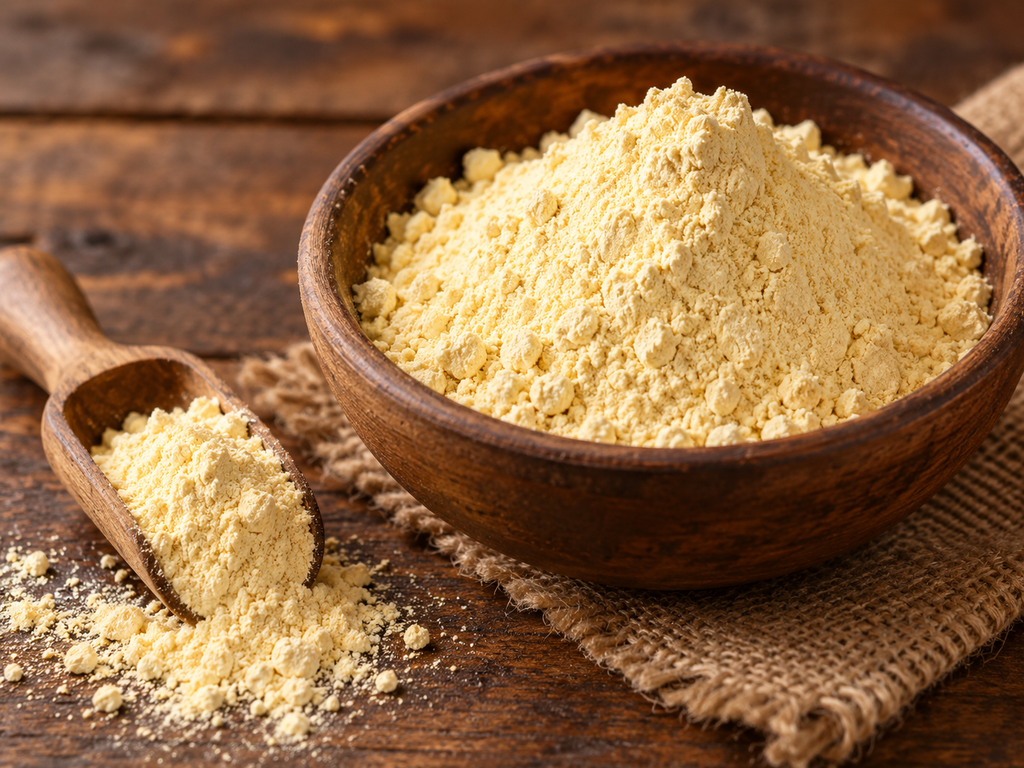
Besan flour is very fine and powdery.
It absorbs moisture very quickly and becomes a sticky paste.
Besan or gram flour has a yellowish hue and has a nutty, early flavour profile.
Is gram flour the same as besan?
Gram or besan flour also have different titles or names throughout the world.
Besan flour is used in India, Pakistan, Bangladesh and Nepal.
Gram flour is used in the United Kingdom, Australia and again in India.
If you are in the United States or Latin America, then you might find the ingredient to be referred to as barbanzo flour.
In Italy, then you will discover the foodstuff is cece and cici flour.
What is chickpea flour?
Chickpea flour, as the name suggests, is made from chickpeas.
Always check the labels on food packaging, as there are various ways in which chickpea flour is produced.
That means you can buy two packets or bags of chickpea flour and when you open them, they can look different and have differing textures.
Chickpea flour is usually made from whole Kabuli chickpeas, which might be described as standard white or tan garbanzo beans.
This type of flour has a coarser texture and is fluffier.
Liquid absorption is ‘slower’, while the flavour is milder and more neutral.
The colour tends to be a light beige or a creamy white.
Why can gram flour and chickpea flour look different?
While gram flour tends to have a shade of yellow and is of a finer texture, and chickpea flour is coarser and with a darker colour, there is an explanation for these differences.
Gram flour is usually milled from dried, split and dehulled chickpeas (sometimes called chana dal); these are milled using steel rollers or a traditional stone mill process which create a finer flour.
Chickpea flour is made from whole white or split brown chickpeas using heavy duty rollers or similar, creating a coarser flour.
So, are gram flour and chickpea flour actually the same thing?
As we’ve seen above the terms gram flour and chickpea flour are used interchangeably.
The best way to decide which flour you need is to study the recipe carefully.
A recipe may ask for a specific flour to be used in its ingredient list.
It is worth researching the recipe first so you are fully informed as to which flour to use.
The simplest rule when you are shopping
If you are shopping in a specialist food shop, at a food market or festival, or online, always read the flour packaging closely.
See whether it is labelled gram/besan/chickpea flour, and whether the recipe they are following specifies one type.
What do gram flour and chickpea flour taste like?
Unlike wheat-based flours, which can contain gluten and which don’t really have a distinctive flavour, gram flour has a nutty, earthy flavour; chickpea flour is milder in taste, and is arguably more ‘neutral’.
All flours can affect the flavour of the finished dish and this should be considered if you are creating tasty batters for your dishes.
What happens to the texture when it is cooked?
Cooking any foodstuff is a chemical process, and some processes are better for certain recipes than others.
Chickpea flour is often used in Mediterranean cooking and is used in flatbreads, for example.
It has a lighter, fluffier density with a denser crumb texture.
If you are using gram or chickpea flour in your cooking, then consider the textures of the flours and also read the recipe thoroughly.
Gram flour, with its finer texture, is often used for pakoras or onion bhajis.
It acts as a good binding agent and is therefore a good option for creating delicious side dishes.
Why is gram flour used for onion bhajis?
What tastier accompaniment to a curry or similar dish than onion bhaji?
Gram flour helps bind the sliced onion and various spices together
Read our easy-to-follow onion bhaji recipe
What should onion bhaji batter look like?
Gram flour absorbs water easily and creates a smoother, lighter batter.
We strongly recommend you use gram flour along with spices, sliced onion and did you know you can now cook them in your air fryer as well as in hot oil?
Using gram flour will ensure the batter mixture, once prepared, will cling to the onion and will provide a tasty dish for you to enjoy.
The batter should not be too wet so add water very carefully.
If the mixture is too dry
Gradually add more water if required.
If the mixture is too wet
Gradually add more gram flour or add in a bit of rice flour.
What else can you make with gram flour?
You can also use gram flour for the following tasty foods such as pakoras, vegetable fritters and for other culinary delights such as roti.
These dishes can transform your curry at home at night, using Twister Curry spice packs.
https://thetwistedcurry.co.uk/curry-kits
Pakoras and vegetable fritters
You need a medium thick coating for creating these.
Check the recipe for the flour to water ratio.
Savoury batters and coatings
Creating a savoury batter is perfect for crisp coatings and spice-seasoned batters, with a smooth consistency required.
Flatbreads and savoury pancakes
Depending on whether it is a pourable flatbread (which you’ll need a very thin consistency) or rolled flatbreads, in which you’ll need a soft pliable dough, ensure you get the right texture for the best results.
Is gram flour gluten free?
Gram flour is described as gluten free.
It is made from a pulse rather than wheat.
However, the packaging should state its manufacturing processes and if there is any chance of cross contamination.
Check the packet if cross-contamination matters
Some gram flours may be manufactured in premises where other, gluten-containing products are used.
The possibility of cross contamination is always something that needs to be checked by those following a gluten free and wheat free diet.
How should gram flour be stored?
As with all foodstuffs, there is a ‘shelf life’ once an ingredient is opened.
For gram flour, store in an airtight container.
If you have a cool dry pantry, you can store it for 3 to 6 months if well sealed.
In a fridge, gram flour can last up to a year.
And in a freezer, it can last for up to 2 years.
Keep it away from heat, steam and damp.
Always label your containers with a date and description, and keep checking it for signs of deterioration.
Can I use chickpea flour instead of gram flour for onion bhajis?
While it is often claimed that chickpea and gram flour are the same, we hope the differences have now been explained and gram flour is the best one to use for onion bhajis.
Gram flour easily absorbs liquid creating a smooth batter, with a ‘webbed’ effect when the bhahi is cooked correctly.
The batter coupled with the sliced onion and spices complements delicious curries perfectly.
Is besan the same as gram flour?
To avoid any confusion, besan flour is another name for gram flour.
Besan is a Hindi word for gram flour.
Can gram flour replace plain flour?
Yes it can but it will affect the flavour and texture.
Why does gram flour taste bitter before it is cooked?
Gram flour has a nutty earthy flavour.
Recipes and Spice Kits
Check out our onion bhaji recipe along with clear instructions and an ingredient list:
You can have a mix of four or six curry kits or you can create your own!
https://thetwistedcurry.co.uk/selection-box-of-6-items
Relevant curry kits that pair naturally with onion bhajis include Korma, Tikka Massalla, Dhansak, Dupiaza, Saag and others
https://thetwistedcurry.co.uk/curry-kits
versatile ingredient
If you have gram flour in your kitchen store cupboard, the onion bhajis are a very good place to use this versatile ingredient.
Remember to always check the label or packaging for use by dates.
Check out our onion bhaji guide for the full method, then choose a curry kit to turn it into a proper curry night.
Our kits are hand-blended and come with a recipe card too.

