
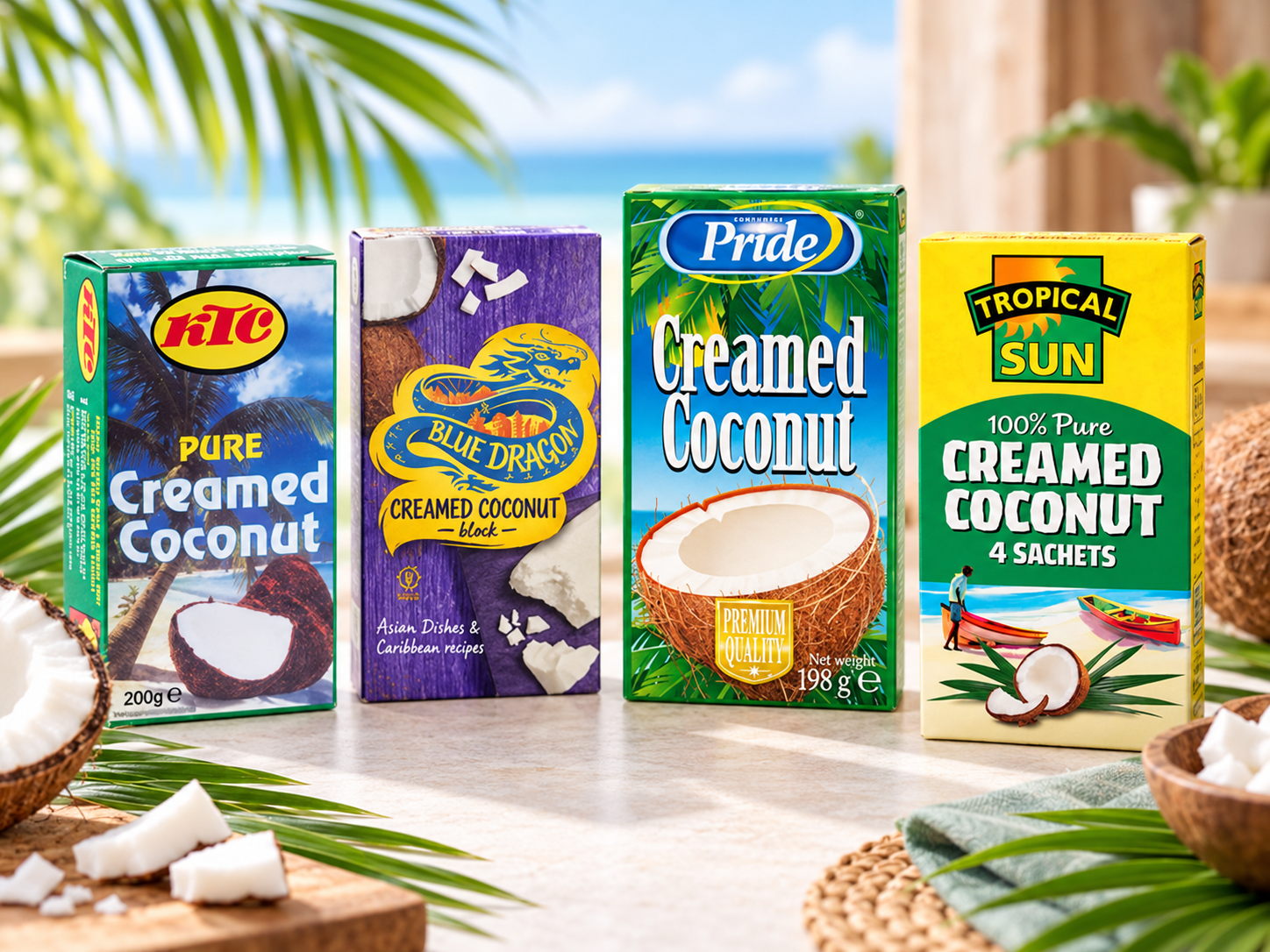
We are often asked about the benefits of using creamed coconut in curries, whether it is an essential ingredient and why it works so well in some curry dishes.
Creamed curry is an unsweetened, solid block made from pure coconut flesh. The flavour enriches various curry dishes, enriching flavour and giving body to sauces, and it melts easily from solid form to liquid.
What is creamed coconut?
Creamed coconut is a concentrated product which is available to purchase in a solid or semi-solid form, usually in blocks or bars. These blocks are made from pure coconut flesh and coconut oil which is dried then made into a thick paste, which solidifies at room temperature.
Creamed coconut blocks can be grated into smaller quantities. Creamed coconut has its origins from tropical regions of the world and if used in curry dishes has the ability to transform the sauce into a thicker, richer and more textured taste experience.
What is creamed coconut made from?
As creamed coconut is made from the flesh (or ‘meat’) of the mature coconut itself, creamed coconut can be used in many of Twisted Curry’s delicious recipes, creating a wide range of classic curry dishes.
Expertly combined taste profiles mix classic spices including cumin, coriander, turmeric, fennel, bay leaves, fenugreek, cassis, star anise, green and black cardamom, cloves, nigella seeds and nutmeg. Each curry kit includes a helpful shopping list of essential ingredients (such as garlic, onions, tomato puree), many of which are store cupboard staples.
Adding protein such as meat or vegetables is also on the list.
And while other products such a natural yoghurt or crème fraiche can be used, creamed coconut gives the dish its superb texture and flavour.
What does creamed coconut taste like?
We are often asked if coconut can overpower a curry dish. With the delicate balance of herbs and spices, the coconut flavour can be subtle, and will depend on the quantity of creamed coconut used.
The team at Twisted Curry are happy to advise on quantities and serving suggestions.
Creamed coconut vs coconut milk vs coconut cream
With phrases such as coconut milk, coconut cream and creamed coconut all used interchangeably, you can be forgiven for getting confused!
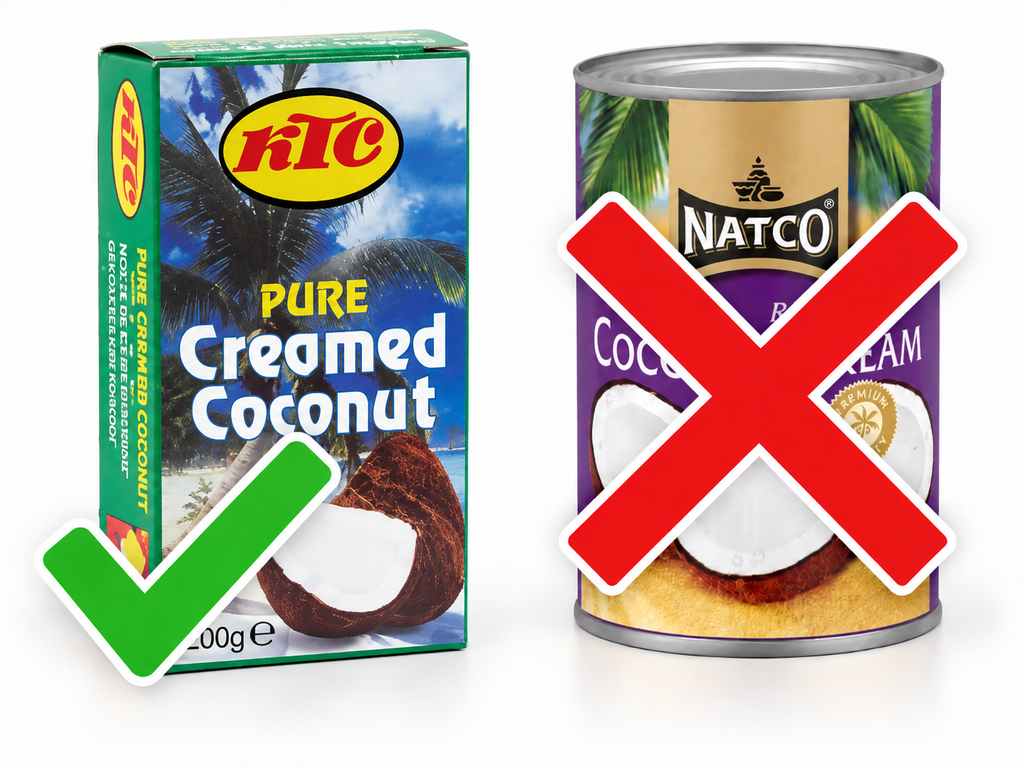
Each of these describe different states of coconut products. Coconut milk is in liquid form, often quite thin and is pourable and convenient and is easier to use and can be used in soups or in thinner curry sauces.
- Coconut cream is thicker and heavier, with a higher ratio of coconut meat.
- If there is a thick layer at the top of a container of coconut cream, don’t worry.
- Again, this can be easy to use providing you know how much to put into your dish.
- Creamed coconut is the sold bar or block which melts easily when heated.
- For this product, it contains 100% concentrated coconut, with virtually all water removed.
- You can slice off sections of creamed coconut making it cost effective.
- Once opened the liquid versions last around 4 days if refrigerated.
- Creamed coconut can last 3 to 4 weeks in a fridge once opened and if correctly stored and labelled.
- H3: Is creamed coconut the same as coconut milk?
- No, creamed coconut and coconut milk are not the same.
- Creamed coconut is concentrated and in a solid format, and can be diluted and used in smaller quantities.
- Coconut milk is already in a liquid format and is therefore not as concentrated.
Is creamed coconut the same as coconut cream?
If you head to your local delicatessen or supermarket, there is a dizzying array of products for creamed coconut and coconut cream. Food producers often use the terminology for similar products.
Using our guide above you can soon learn the different consistencies and textures. Carefully read the packaging and feel the weight of the container, checking if there is liquid inside.
Which one is best for curry?
Curry dishes are so versatile and varied, each curry dish can be made into a delicious repast by adding creamed coconut, coconut milk or coconut cream. Once you have decided which curry you wish to create, then decide what you require by way of the finished dish. Consider whether you want a thick, luxurious curry or a lighter, less dense texture.
Creamed coconut is very useful as it gives the cook better control as to how rich the sauce can be.
How do you turn creamed coconut into coconut milk?
If you purchase creamed coconut, the manufacturer will provide instructions as to how to transform it into coconut milk.
Decide how much creamed coconut you want for your recipe (the Twisted Curry team can help) and cut off the required slice with a clean, sharp knife. Have a saucepan ready with hot water and carefully place the slice of creamed curry into the water. It will melt quickly so don’t leave the sauce pan unattended.
Our tried and tested creamed coconut and hot water ratio is 1 part creamed coconut to 5 parts water (ie, 50g creamed coconut to 250ml of hot water).
A simple method
Keep stirring the creamed coconut and hot water combination until it is smooth, ensuring it doesn’t ‘catch’ or burn.
For a thicker curry sauce
Adding less water will create a thicker sauce. This might take a bit of practice!
For a lighter sauce
Encourage gradual adjustment rather than adding too much at once. If you don’t want a thick curry sauce, or too much coconut flavour, adding more liquid will dilute the creamed coconut into a thinner finish.
How much creamed coconut should you use in a curry?
The amount depends on the quantity of curry you’re preparing, the number of servings you are anticipating, and the heat of the curry itself, so whether it’s a mild curry or one that contains more chilly warmth.
Our ingredient information will give you a guide.
Add it gradually and taste as you go
As with most dishes, add the liquid coconut that you’ve either prepared, or purchased, gradually. This allows you the judge and taste the sauce as you go.
You can also keep an eye on the texture so you can hopefully achieve your perfect curry dish.
What does creamed coconut do to a curry?
Adding creamed curry adds to the thickness of the sauce in the finished dish. It will also depend on the flavour profile, spices and herbs that are included in the curry.
It adds richness and body
One of the main benefits is that it adds body to the sauce and lends the dish a fuller flavour.
It can soften the perception of heat
If you feel the food you are preparing is on the spicy or hot side, then careful adding of creamed coconut can help the dish ‘cool’ down, giving it a creamier taste and offering a more rounded finish.
It is worth noting that adding creamed coconut doesn’t remove the chill from the dish, but it can reduce the chilli ‘hit’.
It changes the flavour as well as the texture
By the same token, creamed coconut is not a neutral thickener or diluter, like water is.
Adding it will add coconut flavour to the dish and it’s worth deciding in advance which curry dish you want to prepare in advance.
Which curries work well with creamed coconut?
Each artisan Twisted Curry spice pack is perfectly and expertly blended to capture the flavour profiles of a wide variety of curry dishes.
Our curry kits that are perfect partners to coconut cream include:
Korma
Flavourful and rich, this curry is thought to have developed in the royal kitchens of the Mughal emperors. Originally a meat-based dish, using cream, yoghurt and spices, this curry has a thick cream sauce.
The korma can be used for vegetable curries. Creamed coconut could be the ingredient you use to enhance this dish, although fat-free coconut yoghurt could also be used.
A mild dish suitable for those who prefer the less intense flavours of other curries.
https://thetwistedcurry.co.uk/korma-curry
Kashmiri
Originating from the Kashmir region of Northern India, this popular curry had a distinctive red colour and varies from mild to moderately spicey. This curry is known for its aromatic flavour rather than the punchy heat of chillies. Spices which can be used include saffron, cinnamon and ginger.
This curry has a creamy texture which creamed coconut can help create.
https://thetwistedcurry.co.uk/kashmiri-curry
Ceylon
Ceylon is now known as Sri Lanka, yet the Ceylon curry is still known for its bold, robust flavour and intense use of natural colours. Spices include cumin, fennel, cloves, curry leaves and fennel. This sauce is great with chicken, beef, fish or vegetables.
The spice blends work well with creamed coconut to help create a rich, aromatic sauce.
https://thetwistedcurry.co.uk/ceylon-curry
Passanda
The Passanda curry is usually mild and creamy using ground almonds or cashews, and including a delicious spice profile. Passanda is derived from the Persian word pasanda, which means favourite.
https://thetwistedcurry.co.uk/passanda-curry
Tikka Massalla
Perhaps the best-known curry, the Tikka Massalla has a rich culinary heritage. Various theories exist about the dish‘’’s origins. Some food historians have traced its roots to the Punjab region of India. Some believe the dish was invented here in the UK to suit a British palate.
And there are still other foodies who think it is a blend of the above!
https://thetwistedcurry.co.uk/tikka-massalla-curry
How should you store creamed coconut?
Store opened coconut products in the fridge and always read the guidance on the packaging. Ensure opened products are covered and used within the use by once opened date.
If you store opened items in a container, ensure you label them correctly.
Can you use creamed coconut instead of coconut milk?
If you are not a fan of creamed coconut, or don’t have any to hand, then other products which you can include natural yogurt or crème fraiche. Using alternatives will depend on the recipe, as some of our curry kits don’t require use of creamed coconut.
Can creamed coconut make a curry too thick?
Adding gradually is advised so you are in control. Also, you can always prepare more creamed coconut if you need it.
Does creamed coconut make curry milder?
While it won’t remove the chillies, adding creamed coconut can soften the flavour of your curry. If you aren’t a fan of the hotter curries, then look at our range of milder options.
Can you freeze leftover creamed coconut?
If you have some creamed coconut left over, check the packaging to see if it’s suitable for freezing. If so, it’s a good idea to place a sticker on the container so once frozen, you can use it in good time.
Completely change the character of a curry
Creamed coconut is one of those ingredients that can completely change the character of a curry,
adding richness, body and a proper coconut hit.
If you fancy putting it to work, take a look at our hand-blended curry kits, including Korma, Kashmiri, Ceylon and Tikka Massalla. Each kit comes with the spice blend and recipe card, so you can concentrate on the cooking rather than measuring out a cupboard full of spices.

